Showing posts with label 旅遊南非洲 Travel to South Africa. Show all posts

Thursday, July 18, 2013

South Africa Freedom Day Apr 27, 1994: "Two Places, Two Dreams" (Updated: 2013 Mandela Day)


To commemorate Mandela Day and his 95th birthday, I am updating the blog article that was posted first on April 27, 2012, after my trip to South Africa.

The authour of the poem, Ingrid de Kok, was born in South Africa in 1951. She emigrated to Canada and lived here from 1977 to 1984 before moving back to her homeland.

I chose these photos of South Africa and Canada to accompany her beautiful poem.


"Two Places, Two Dreams" - Ingrid de Kok

My child, brought from his own country,

is sleeping in a Cape bed
where the black south-easter
delivers boats and fish
to his hot summer dream
of kelp and tentacles
that hang like fingers from his hands.


In his other dream

pines, like ravens blue with cold,
fly into the ice,
and snow falling from low branches
sifts onto his thin chest.


As he calls in the dark,

"Come," "Go,"
the sea invades the low lagoon
and the red cardinal shaken from his sheet
flies into its dense natal tree.

Source:
"Seasonal Fires - New and Selected Poems" by Ingrid de Kok, South Africa (c. 1988, 1997, 2002, 2006); Poems from Familiar Ground (1988): page 27

Photo Credit: Wikipedia
* Top: The Great Karoo / Drakensberg Mountain
* Bottom: The Canadian Rockies / Mount Robson

Related links:


* For my other blog articles and photos on South Africa: Click here -- "Travel to South Africa"* http://passiontounderstand.blogspot.ca/2009/04/south-africa-freedom-day-27-april.html

Wikipedia:
Ingrid de Kok (born 1951) is a South African author and poet. Ingrid grew up in Stilfontein, a gold mining town in what was then the Western Transvaal. When she was 12 years old, her parents moved to Johannesburg. In 1977 she emigrated to Canada where she lived until returning to South Africa in 1984. ...

Ingrid is a Fellow of the University of Cape Town, an Associate Professor in Extra Mural Studies and part of a team of two that designs and administers the public non-formal educational curriculum that constitutes the Extra-Mural Programmes at the University of Cape Town. .... She is the Chair of the South African Association of Canadian Studies.

Between 1977 and 2006 Ingrid's poems have been published in numerous South African literary journals, including Upstream, Sesame, Staffrider, Contrast, New Contrast, New Coin, Carapace. Occasionally poems have also appeared, translated into Afrikaans, in various South African Afrikaans newspapers....

Thursday, November 04, 2010

成功建國: 瞎子摸象 / Successful Nation Building: Is that an Elephant?


Here are my comments in response to Space's Nov 3, 2010 blog article entitled "人民素質展示"

++++++++++++++++++++++++++++++++++++++++++++++

Haricot to Space:

Thank you for the excellent, excellent article on "人民素質展示", as well as the great references on GDP, HDI, GNH, HPI, etc. The richness/divergence of information in your blog is one of the reasons why I keep coming back !!!

Your article raises the difficult issue of defining and measuring success in nation building. As you have pointed out, China has advanced tremendously in its "hardware硬件" department but seems to lack behind other developed countries when it comes to "software軟件" (which you call 普偏人民素質).

While I agree with you that GNP and GDP measure only a country's economic results and should not be the only indicators of success, I am hesitant to drop them and embrace HDI, GNH, HPI, etc as my new favourites. Just like GNP and GDP, these indices are only indicators of success, but not success itself.

In a way, the challenge is like the 瞎子摸象 story, it's the combination of the different descriptive indicators that will provide a more complete picture of what we are imagining is the "real" thing, and even then, we might not all agree on what the "real" thing (in this case: success in nation building) would/should look like. For example: Ever since the release of the 2006 UN Gross National Happiness GNH report 「全球快樂排行榜」which ranked不丹 #1 among Asian countries and 8th in the world, there has not been a big line-up of ppl trying to immigrate into that country (not counting the 100,000 Lhotshampas that had been expelled by the govt). The same with the Happy Planet Index: The tourist industry of Jamaica is hurting because of the reported high crime rate, and yet its HPI was ranked 3rd by the New Economics Foundation in 2009. Even with the widely used HDI Human Development Index, which measures life expectancy, literacy, education and standards of living, some critics are saying that the indicator does not take into account a human being's spiritual and moral development.

Conclusions:

1. Defining and measuring success in nation building is a complex, multi-faceted task that will require a combination of different indicators, none of which by itself will tell the "real" story.

2. The "real" story is real only if everyone agrees to the methodologies of defining and measuring success. Otherwise, nobody can say for sure, whether there is or is not an elephant in the meeting room.

++++++++++++++++++++++++++++++++++++++++++

Just a thought:

I should find time to do some research and write an article to further explore an approach to define and measure the success/failure of nation building.

++++++++++++++++++++++++++++++++++++++++++
References:
* A related article I started on Oct 29, 2008: 建國 - 行政重點和基礎設施 (其一) / Nation Building - Priorities and Infrastructure (Part 1) (I will write Part 2, some day !!)
* Space: 人民素質展示

Photo credit:
* I took a photo of this poster in the Dolphin Coast B&B place on Dec 5, 2009 during the trip through South Africa

Saturday, August 14, 2010

旅遊南非洲 (十): 開普敦 桌山 / Travel to South Africa (Part 10): Table Mountain, Cape Town

According to Wikipedia:

"... 桌山, 又名特布爾山(英語: Table Mountain,南非荷蘭語Afrikaner: Tafelberg)位於南非西開普省開普敦Cape Town附近,是一座頂部平坦的沙岩山。桌山被葡萄牙航海家迪亞士1488年首次發現,跟着這座山就成為了海員的「燈塔」。桌山海拔1,086米,大約形成於志留紀或奧陶紀。由於其頂部異常平坦且可以俯看開普敦半島,因此桌山成為了南非的一個著名的旅遊景點。桌山有雲覆蓋,雲層是刮東南風迅速形成的,它是高原植被繁茂的主要因素,5個高山水庫貯藏的水就是由冬天西北風帶來的雨水,山頂的年降雨量為1525毫米。

桌灣Table Bay是南非開普敦的海港,在非洲南端附近的大西洋邊上,桌灣從開普敦向北伸展,全長約19千米,寛約13千米 葡萄牙人是最早看到桌灣的歐洲人,桌灣有充足的淡水,因此曾成為去印度和東方的船隻停泊的地點,荷蘭人曾於1652年在岸邊定居。..."
References:
* Text and photo credit 攝影图片: 維基百科 桌山
* Please click here to read my other blog articles and photos about Travel to South Africa

Wednesday, July 14, 2010

「兩週一聚」第42期題目:【塞翁失馬】 / 2weeks1gather #42: "Life is Full of Surprises"


Prologue: The following article is based on a real story. Some facts are modified to protect the identities and privacy of the individuals involved.

塞翁失馬 / Life is Full of Surprises

當敎育部在九月批准阿健提早退休的申請紙時,他心裏感受真不知道是什么味兒,是憂?是喜? 還是像打翻了的五味架?

大約兩年前,四十歲的阿健在一間公立中學任教一份入息頗好的體育教練職位,他備受學生的愛戴,同事的支持,事業如日中天, 他躊躇滿志,從未有想到退休這一回事。

校長曾私下对他說:『阿健,你的表現良好,我会向教育部推薦你升級加薪。』他聽了心下一樂, 眼瞳遙望美好的將來。

但是平地一声雷,輕微的麻痺原來是腳癌的先兆,緊急手術之後,阿健失去了一截下腿,一個昂堂六呎的男人,一拐一拐的從三樓教員室往楼下操場。肢體殘廢看得見,但心理損傷卻是隱藏在深処。校長也再沒有重提升級一事。

妻子对他說:『你要是做得不愉快,為什么不暫停工作,休息一会兒,我的入息也可以暫時支持我們倆口子的生計。』阿健聽妻子的勸告,請了病假,在家裡呆了数月,最後還是决定申請 permanent disability, 提早退休。

退休之後,阿健在家裏納悶,直到有一天,海地島發生大地震,死傷無數,很多學校被夷為平地!!膝下猶虛的阿健和妻子商量,打定了主意。

在渥太華机場,阿健和妻子依依不捨,臨別時,她倚偎在他懷裏說: 『Ken, now that you have finished your job with the School Board, it's time to find out your real purpose on Earth. 』

想到這裏,阿健心酸了,海風撲面吹來,點點淚水隨風四散。

"Monsieur Ken?" 一把熟悉的声音,把他扯回到現實,一個帶有 Creole 口音的教師關切的望著他。"Ça va?"

"Oui, ça va, Madame Prospere !!"

在加勒比海的艷陽下,阿健和他的海地島同僚,看著一群學生,在凹凸不平的操場中,嬉哈追逐玩耍。

Postscript: Ken's wife eventually joint him overseas. They are now devoting their lives in helping children in developing countries.

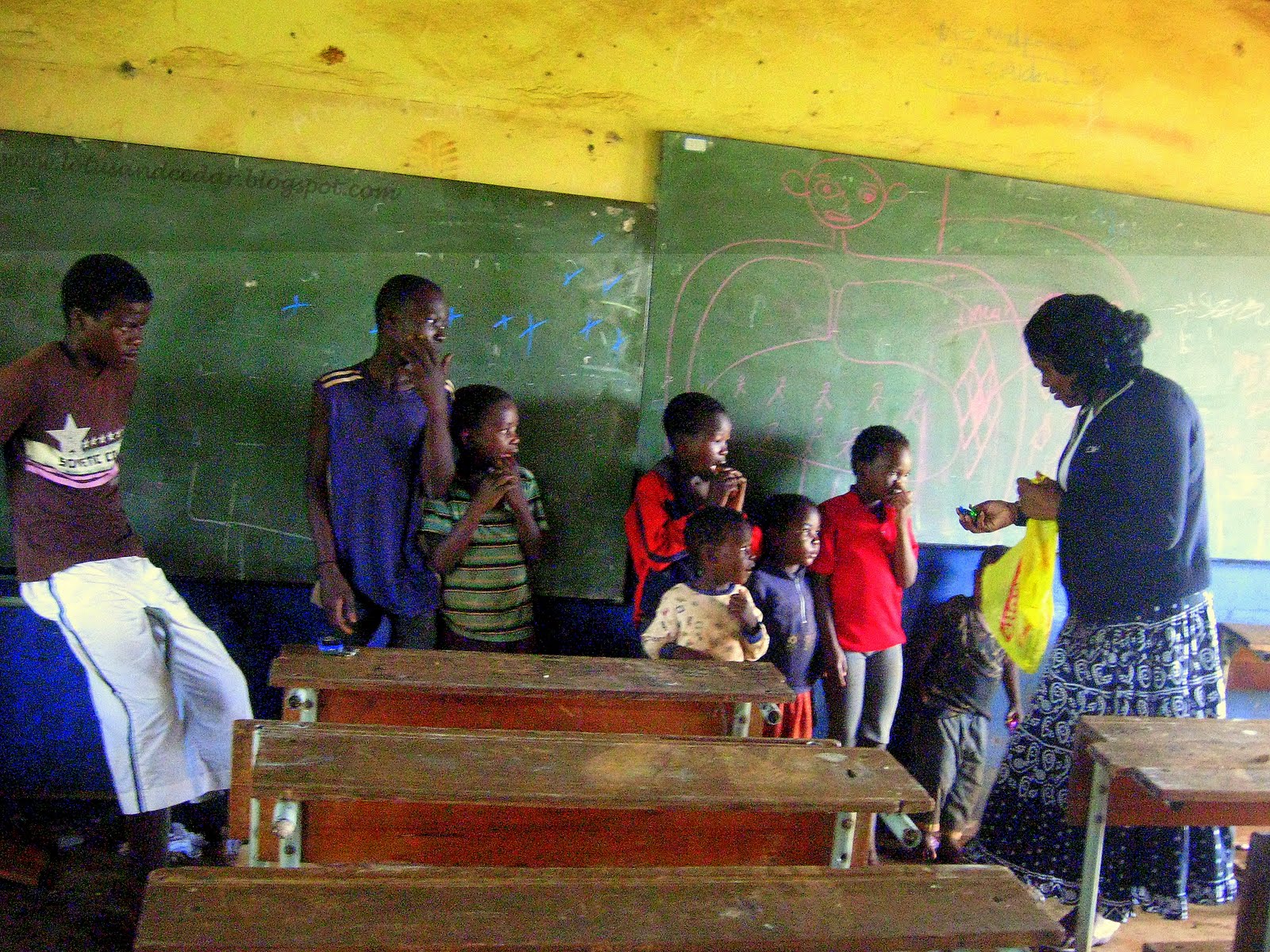
Photo caption/credit: A teacher and her students in an under-funded village school (photo taken by Haricot)

~~~~~~~~~~~~~~~~~~~~~~~~~~~~~~~~~~~~~~~~~~~~~

Related articles:
* Lotusandcedar: "愛情的分叉路 / What could have been .... ?"
Chinese: http://lotusandcedar.blogspot.com/2006/12/what-could-have-been_12.html
English: http://lotusandcedar.blogspot.com/2006/12/what-could-have-been.html

Reference:
* Other articles with the same theme/title: http://www.2weeks1gather.wordpress.com/
* Vic: 兩週一聚第四十二期題目: 塞翁失馬
第一次出題,想過幾個題目,覺得這個和生活的關係最大有否試過失去了某些機會/人/事/物而非常不快過了一段時間,可能是幾天,甚至幾年後想起如果不是失去了某東西,就不會有今天自己滿意的生活?七月十五日,談一下你的經歷

Friday, June 25, 2010

旅遊南非洲 (九) : 貧富懸殊 ∕ Travel to South Africa (Part 9): Rich and Poor

Photo Credit 攝影圖片: All three photos were taken by lotusandcedar in South Africa.

非洲大陸一代代的人經歷過無數次天災人禍,有許多國家的未來道路仍是崎嶇不平。就算是資源工業最發達的南非共和國,貧富懸殊仍是一個大問題,如图示。

加拿大總督米凱勒·讓(莊美楷)(Michaëlle Jean)說得沒錯,即使是困難重重,人民仍需要信心和希望,努力工作,共創美好將來。

~~~~~~~~~~~~~~~~~~~~~~~~~~~~~~~~~~~~~~~

Governor General of Canada - Speech to African Country Leaders

Having visited South Africa earlier this year, I listened with interest the Governor General's speech delivered earlier today. I shall miss this "people GG" when she finishes her 5-year term in September this year.

Luncheon with African Country Leaders Attending the G8 Summit in Muskoka
Huntsville, Friday, June 25, 2010


CHECK AGAINST DELIVERY

I am very pleased to welcome you to Canada and more particularly to beautiful Muskoka, which in the language of the Algonquin people, one of the First Nations of the Americas, means “the land of red earth.”

Africa, in which I have travelled from one end to the other, right to its very heart, is in my blood and in my heart.

I have gone on 10 missions to Africa on three different trips, something no Governor General of Canada has done before.

And I have discovered that Africa, this continent of my ancestors, which faces countless challenges, is a place full of promise, one very different from the pessimistic vision we are too often shown.

President Zuma, as the FIFA World Cup is taking place in your country, I am delighted to see in the major national and international press the South Africa that I discovered in 2006 during my State visit: a country that embodies hope and freedom.

During each of my visits, three of which were to countries you represent—South Africa, as I just mentioned, Algeria, also in 2006, and Senegal, which I visited recently, as President Wade will confirm—I saw the determination of the people to focus on the forces of life.

All of Africa's hidden promises—and there are a great many—are embodied in the actions of the women and men from all walks of life, from those in civil society to elected officials, young and old alike, who are responding to the challenges that their communities, their societies are facing with courage, conviction and dignity.

And I am more convinced than ever that it is through women that Africa’s renaissance will happen because African women carry this continent on their shoulders and its development is dependent on the daily efforts they make.

Women who demonstrate a tireless commitment to the well-being of their community.

Women who play a key role as ministers or parliamentarians.

Women like the President of Liberia, Her Excellency Ellen Johnson-Sirleaf, whom I met at an International Colloquium on Women’s Empowerment, Leadership Development and Security, to which she had invited me.

Women, also, who perform essential work in vitals sectors such as health care, education and justice.

Everywhere, African women mobilize forces and energies to tackle difficult but essential issues such as family planning, the physical integrity of young girls, access to education, food security and many other issues.

These women are a source of inspiration, and recognizing their contribution has always been an unwavering priority for me.

In all the countries in which I have travelled, it has been clear that there is a genuine determination to end the misery afflicting Africa.

Africa is working hard to achieve good governance, fight hunger and disease, provide its daughters and sons with an education, and finally put an end to the conflicts and violence.

You may be sure that Canadians share the African people’s hopes for peace, security and prosperity, as well as their confidence in their ability to take full control of their destiny.

Even though it has borne and continues to bear the scars of history, today, Africa is constantly reinventing itself and making a unique contribution to the wealth and well-being of humanity.

It is to that Africa that I raise my glass.

To its renaissance.

And to the friendship that binds us across the ocean.


(Source: Governor General of Canada website)


Friday, June 11, 2010

旅遊南非洲 (八) : 2010年的世界盃足球賽 ∕ Travel to South Africa (Part 8): FIFA 2010 World Cup Football

攝影圖片 Photo credit: 這些照片是我旅遊南非開普敦 Cape Town 時拍攝的,最頂照片是桌山 Table Mountain,當時世界盃足球體育場 Green Point Stadium 正在興建中。
還記得在2006年旅遊意大利的時侯,世界盃足球淘汰賽進行正是如火如荼,每当電視廣播賽事的時候,波迷面孔都沈醉在螢光幕前面,整個社会的商業經濟都似乎是停頓下來。在意大利嬴了總决賽那一晚,羅馬永恒城街道水泄不通,瘋狂的群众在市中吶喊丶跳舞丶狂欢慶祝,好不熱鬧!!

今年2010年的世界盃足球賽,我除了繼續替意大利隊打氣之外,心裏对南非隊也保留了精神上的支持,雖然後者得勝的机会甚微,但我覺得南非國家受儘種族戰爭蹂躝,未來政治路途仍是崎嶇,人民是非常需要一個團結「彩虹國」Rainbow Country 各色人種的机会。

不論您是足球迷与否,
白人丶黑人丶不論任何種族,
希望在人間,加油啊!!


+++++++++++++++++++++++++++++++++++++++++++++++++++++++++++

Related articles: (source: Reuters Fri, 11 Jun 17:49:00 2010)

Cape Town's Green Point hungry for the limelight

Noisy fans streamed to Green Point stadium on Friday as night fell over Cape Town, with dazzling yellow South Africa shirts outnumbering the sky blue of Uruguay and dark blue of France.

South Africa's "Mother City" was hungry for the limelight after the 2010 World Cup got off to a glittering start in Johannesburg's Soccer City with an opening celebration and a 1-1 draw for the hosts with Mexico.

French fans were somewhat thin on the ground in Cape Town but the local Congolese community turned out in force to help boost the numbers.

"Of course I'm an African so I'll also support the hosts, but my first team has to be France. It's the same for all us from French-speaking Africa," said Richard Loemba, a 30-year-old student from Brazzaville.

Scepticism at home about the chances of the France team, 1998 winners and runners-up in 2006, was reflected in the demeanour of some of the fans.

"I think our chances are pretty slim," said 40-year-old David Rauzet, from Paris, combining the soccer with a holiday around South Africa with his father and uncle.

Asked where all the French fans were, his father Alain, 66, answered: "In France."

Most fans sported thick clothing under their soccer shirts as the temperature dropped after a day of brilliant sunshine.

The 70,000 capacity stadium, which boasts a spectacular location between the mountains and the sea, glowed a graceful, dim white.

"I read that only 4,000 French fans came over so those of us that are here will have to make more noise," said Julien Damon, a 26-year-old student from St Etienne, who works in South Africa.

There were surprisingly few vuvuzelas among the supporters of both France and Uruguay, given the way vuvuzela fever has seized the country.

"It is too difficult to play. I tried, but I can't do it," said Sergio Fernandez, a 36-year-old office employee from Colonia, Uruguay, who said he would stay in South Africa as long as his team did.

"We won the World Cup twice so our chances are good," he said. Reminded that Uruguay's last victory came in 1950, he smiled. "Then it is time for us again then."

Monday, June 07, 2010

旅遊南非洲(七) : 從南極移民來的黑腳企鵝 / Travel to South Africa (Part 7): Immigrants from Antarctica, the African Penguins


"親愛的,我答应妳終有一天,我們是会返回南極老家啊!!!

I promise you dear, one of these days,
we will go back home
to Antarctica !!!"

Sunday, May 23, 2010

旅遊南非洲 (六): 死亡「它」在等待著 ∕ Travel to South Africa (Part 6): Death Was Waiting Patiently


在旅遊南非州叢林山野的時候,我遠離了政治丶宗教,除下有色眼鏡,脫了城市人的衣服,嘗試赤裸裸地用自己動物的感官來覺察其它週圍的生物丶環境丶動態,以下是我的報告。


導遊問: 『您們嗅到獅子的氣味嗎?』我說:『嗅不到。』導遊問: 『您們看到那樹頂的禿鷹嗎?』我答: 『看不見。」他指著泥土說:『這是水牛的足跡,那是犀牛的腳印。』我看到的只是一些爛泥在枯枝中央。突然,導遊緊張地說: 『不要動!!!』,他跟著慢慢地把我和其他人拉後,離開身旁一些灌木。数秒鐘後,他抹了一額汗,鬆了一口氣,指給我們看。各位讀者,在我貼上的攝影图片中,您看到「它」嗎??!!


死亡「它」在等待著 !!


(.... / to be continued)

Saturday, May 22, 2010

旅遊南非洲 (五) : 美麗丶醜惡丶生存 ∕ Travel to South Africa (Part 5): Beauty , Ugliness, and Survival


很多往探訪南非的遊客,多会讚賞這個國家美麗的山林海景,感嘆上世紀醜惡的種族歧視,和了解大自然適者生存的現實條件。

美麗丶醜惡是人類的價值覌,定義隨時間丶地方、風俗丶文化而改變。

但在弱肉強食的原始世界裏,生存似乎是永恒,和人類的美麗丶醜惡覌念沒有什么關係。


上網在 YouTube 看到了這個視頻:


孩子: 『多可愛的獅子!!』
父親: 『它們在看什麼? 那边,那边,一隻在路旁覓食的長頸鹿啊!!』
(潛伏的獅子突然出現,撲噬長頸鹿,鹿兒不敵倒地被生吃,成了獅子腹中物)
孩子: 『..... 嗚嗚嗚嗚!!!!』

唉!! 那是很殘忍,但也很現實的一課。


下續:

旅遊南非洲 (六): 死亡「它」在等待著 ∕ Travel to South Africa (Part 6): Death Was Waiting Patiently

Tuesday, April 27, 2010

旅遊南非洲 (四): 1994年4月27日自由日 / Travel to South Africa (4): Freedom Day April 27, 1994

攝影圖片Photo #1: Under Apartheid laws 種族隔離制度統治, blacks and coloured peoples were prohibited in areas designated for whites only.


攝影圖片Photo #2: During the Apartheid era, violent confrontations were common in South Africa, especially in black townships, as shown in this painting.

攝影圖片Photo #3: This is an artist's interpretation of the military/police of the Apartheid government.

攝影圖片Photo #4: Click the photo below to read the definitions of "Whites", "Honour Whites", "Blacks" and "Coloured People" under the Apartheid laws.

攝影圖片Photo #5: An artist's painting of a native.

攝影圖片Photo #6: Nobel Square in the Victoria & Alfred Waterfront features statues of South Africa's four Nobel Peace Prize winners - Albert Luthuli, Desmond Tutu, F.W. de Klerk and Nelson Mandela.

旅遊南非洲 (四): 自由日 / Travel to South Africa (4): Freedom Day

To commemorate South Africa's Freedom Day on April 27th, I have posted the above six photos, some of which I took when I was travelling in Cape Town.

According to Wikipedia:

"... Freedom Day is a South African public holiday celebrated on April 27. It celebrates freedom and commemorates the first post-apartheid elections held on that day in 1994. The elections were the first non-racial national elections where everyone of voting age of over 18 from any race group including non-citizens were allowed to vote, no voters roll was used. Previously, under the apartheid regime, non-whites had only limited rights to vote.

自由日是南非共和國的一個公共假日,定在每年的4月27日。自由日是為了慶祝南非1994年廢除種族隔離制度之後,人民獲得政治自由和進行了南非歷史上第一次不分種族的全民大選而設立的節日。這次大選,凡是南非年滿18歲的國民,不分種族,都具有投票權。而在此之前,在種族隔離制度統治下,南非非白種人在大選中投票只有有限的權利。..."

While it is easy to celebrate the victory of freedom over apartheid, one should not have the illusion that everything is hunky-dory in South Africa. Based on recent newspaper reports (especially those published after the murder of Eugene Terreblanche, a key figure of the far-right AWB) and my conversations with some of the locals during the trip, there are serious concerns and a deep sense of uncertainty abt the social, economic, and political future of the country.

Some Afrikaners fear that once Mr. Nelson Mandela 納爾遜•曼德拉passes away, South Africa will go the way of Zimbabwe and whites will be forced off the lands and even killed by the likes of Julius Malema (the ANC youth leader who sang an anti-apartheid song that advocated "kill the Boer" at a rally; "boer" is a farmer in Afrikaans布林語 - 南非通用的荷蘭語). Meanwhile, many blacks who are still living in shanty towns and neighbourhoods run by tsotsi (thugs) are complaining bitterly that their lives remain poor in the post-apartheid era.

South Africa is a beautiful country and it will be a shame if it goes down the drain like so many other failed states on the continent. Let's hope the peoples of South Africa will continue to work with each other across the spectrum of the rainbow for the better future of their country.

Photo Credit:
* First and last photo: Wikipedia
* Second, third, fourth and fifth photos: Lotusandcedar

Thursday, April 01, 2010

旅遊南非洲 (三): 獵豹 / Travel to South Africa (3): Cheetah


I took this photo at a national park in South Africa. The cheetah was lurking behind the fence eyeing the tourists (especially the little girl next to me) when all of a sudden it charged !!! In less than a second, the cat was lunging at the fence that separated the girl and its jaws. Everyone was shocked by the cheetah's speed and ferocity and the poor child was just screaming. Later the local guide told us: Big cats all have an instinct to kill the young and weak. Death by a cheetah is excruciating. A human does not have a long neck like other preys, so the cat doesn't know what to do and will just bite at the head and claw the body open, as opposed to puncturing the neck artery and bleeding the prey to death. In the veld, it is eat, or be eaten. (You get the picture)

Reference:

* Wikipedia "Cheetah 獵豹" http://zh.wikipedia.org/zh-hk/%E7%8C%8E%E8%B1%B9
"...獵豹主要分佈在非洲與西亞..是陸上奔跑最快的動物,全速奔馳的獵豹,時速可以超過110公里,相當於百米世界冠軍的三倍快。 ..它可以在3步之內,從靜止加速到時速65公里,幾秒鐘就會達到全速110公里。..接近全速時,獵豹每秒鐘大約跑3步,這時它的呼吸頻率從平時約每分鐘65次竄升到150次。..."
(Haricot: It usually takes me 10 minutes to raise my heartbeat from abt 40-50 to 150 bpm. I am lunch !!!!)

Wednesday, March 10, 2010

兩週一聚 (三十三期), 旅遊南非洲 (二): 完美的一餐「油泡白蟻」 / 2weeks1gather (#33), Travel to South Africa (2):「A Perfect Meal - Deep Fried Termites」


「山珍海錯」系列之「油泡白蟻」 / My List of Exotic Foods - Deep Fried Termites

在南非森林旅遊露營,有問Safari探險導遊,如在荒野迷失路途,手無寸鉄,怎能獵食生存?答曰:『非洲叢林,白蟻種類繁多,肥大美味,營養豐富,油泡後如吃爆穀,粒粒鬆脆。』言後導遊指示營厨,在附近白蟻山巢左翻右挑,精選百隻生猛蟻兒,放入油鑊鮮炸,未幾灶君禮成,山珍上碟,導遊食指大動,与營厨佳餚美酒,大快朵頤,微豆亦不甘後人,力為唐人面子爭光,嚼咬一口子油泡白蟻,其他/她歐美遊客見狀面面相覤,不知如何是好,有拒而不受,面露尷尬者,有小心翼翼,畧試少嚐者。其實南非白蟻,類似香港龍虱,觀之皆屬天然食品,昆蟲疍白質豐,迷途旅客於非常時期,可用以充飢偷生,故予在此將「油泡白蟻」標籤歸錄,存入「山珍海錯」網誌系列,行善救人,奇文共賞,一石二鳥,亦無不可。

During my trip to South Africa, I asked my Safari guide what a lost, unarmed tourist could do to sustain life in the bush. He replied without thinking: "You can eat deep-fried termites. There are lots of them big and juicy ants in the bush and they taste crunchy like popcorn." He then asked the camp cook to find a termite mound near by and dig up about a hundred of the fattest and most juicy ones he could find. The creepy crawlers were deep-fried live and upon their demise, were served up like popcorn on a plate. The bush guide and camp cook then whipped out a bottle of cheap wine and proceeded to dine eagerly on the exotic dish of insects. Being the lone representative of the Tang people in the tour group, I grabbed a handful of the crunchy termites and stuffed them in my mouth. However, my fellow American and European travellers were less enthusiastic. Some politely declined the offer while a few picked at the plate and gingerly tasted one or two of the critters. The yuck factor aside, there is no difference btwn eating termites from South Africa and water beetles from Hong Kong, both being wild insects high with naturally occurring protein. By posting this article on my blog under the tag "exotic foods", I am hoping that the indigenous knowledge might some day save the life of a hopelessly lost tourist in the African bush.

Related Articles:
* 旅遊南非洲: (一) 首章 / Travel to South Africa: (1) Introduction http://lotusandcedar.blogspot.com/2009/12/travel-to-south-africa-1-introduction.html
* 出題者 "Just Little Something": "... 很喜歡吃,而且覺得和誰吃好東西很重要,所以此這一題主要是「吃什麼」,和「跟誰吃」。吃什麼可以寫詳細的三至五道菜,可以mix and match中西日法越印(甚至快餐、街頭小吃)而成,也可獨沽一味,總之是愛吃的。跟誰吃也很重要,人物古今中外、虛構(動漫人物)的也可。可以談內容也可不講。..."
* 兩週一聚第三十三期: 完美的一餐(食物/人物) ,開餐了 !!!

Sunday, December 20, 2009

旅遊南非洲: (一) 首章 / Travel to South Africa: (1) Introduction

By the time you see this message, I would have been back from South Africa (cross my fingers). I will try to upload asap some of the photos I took.

Stay tuned !!!

ps: I look forward to having a snowy Christmas back home and do some serious cross-country and downhill skiing !!!

Photo Credit: "South Africa Coat of Arms + Flag" http://en.wikipedia.org/wiki/South_Africa

References:
南非 http://zh.wikipedia.org/zh-hk/%E5%8D%97%E9%9D%9E

經濟: 根據聯合國分類,南非是一個中收入發展中國家,資源豐富,財經、法律、通訊、能源、交通業發達,完備的硬件建設和股票交易市場居全球前二十名。2007年,南非的國民生產總值排在全球第20位。標準銀行是源自南非的一大銀行集團。 南非裡發展程度最高的區域包括開普敦、約翰內斯堡、德班,及伊麗莎白港。但這些區域外的其他地區發展程度卻非常有限,形成南非國內嚴重的貧富懸殊問題。另外,南非國內的不同人種收入懸殊造成黑人有排外傾向、罪案率與貪污問題嚴重,附近國家難民持續湧入,與及愛滋病率高升,也令經濟發展受限制。所以雖然南非是非洲內人均國內生產總值第四高的國家,他依然被稱為發展中國家。 南非的法定貨幣單位是南非蘭特。蘭特在2001年一次大貶值後,在隨後的2002-2005年間,曾經是世界上兌美元升值最快的貨幣,2005年後蘭特又隨着經濟增長放慢而走軟,此情況持續至今。 2008年南非因國家內部電力設施不足而發生了能源危機,國家需要間歇性在不同地區停止供電。這嚴重影響了國內的大部分工商業的運作,但由於南非國內利率高企及社會不穩,私人資金不願大規模投資能源行業,而政府在基建審批上過度嚴苛,故電力供應的問題短期內未有解決蹟象。

外交: 1991年以前,南非採行種族隔離政策,遭受國際社會普遍抵制,國際地位極為孤立。1991年6月南非實現轉型正義廢除種族隔離政策後,世界各國相繼解除對南非經濟制裁,並紛紛提昇、恢復或建立與南非之外交關係。1998年1月1日,南非跟中華民國斷交,並跟中華人民共和國建立外交關係。 南非1994年由非洲民族議會黨執政以來,對外政策以非洲集團領袖自居,積極推動非洲統合,促成非洲團結組織。2001年常會決議通過成立非洲發展新夥伴計劃,並成功改組成非洲聯盟,為南部非洲發展共同體及不結盟運動龍頭,以第三世界代言人自居。
Related Posts with Thumbnails